Woodside Or Portola Valley? Choosing Your Rural Retreat
May 21, 2026
May 21, 2026
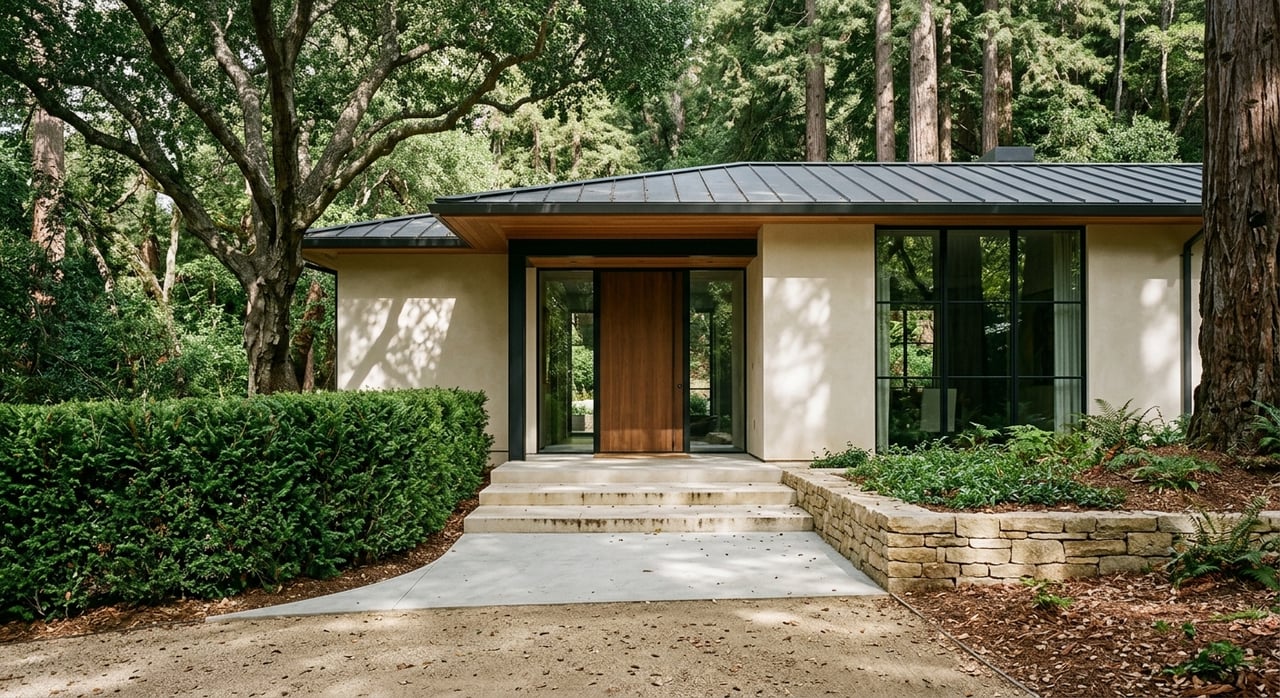
Trying to choose between Woodside and Portola Valley? You are not alone. Buyers looking for a quieter, land-rich Peninsula lifestyle often narrow the search to these two towns, then realize the decision comes down to feel, setting, and how you want to live day to day. This guide will help you compare the two clearly, so you can see which rural retreat better fits your priorities. Let’s dive in.
Woodside and Portola Valley are both small, low-density communities shaped by open space, natural land, and a strong commitment to preserving a rural setting. In the 2020 Census, Woodside had 5,309 residents and Portola Valley had 4,456, which helps explain why both towns feel intimate and distinct from more built-up Peninsula locations.
In both places, open space is not just nearby. It is central to the identity of the town. Portola Valley’s planning documents emphasize land use, scenic roads, trails, and preservation of rural character, while Woodside highlights surrounding natural habitat, wildlife corridors, and trail preservation.
That shared foundation matters if you are looking for privacy, scenery, and a retreat-like atmosphere. In either town, you should expect a market where land, topography, and setting carry real weight in home value and day-to-day experience.
Woodside tends to feel more like classic estate and horse country. The town center gives it a recognizable village hub, with a grocery store, hardware store, restaurants, shops, offices, and Town Hall gathered in the heart of town.
That village element adds a sense of place that many buyers notice right away. You can have a private property and still feel connected to a small civic core, which is somewhat unusual in a low-density luxury market.
Woodside also shows meaningful variation by area. Town materials note that densities are greater in the eastern part of town, closer to the more urban Peninsula, while the western side is lower-density and more rugged in the Santa Cruz Mountains.
Portola Valley feels more intentionally planned and more visually unified. The town describes its identity through scenic roads, open space, natural views, and architectural guidelines that encourage homes to blend into the landscape.
Its Town Center has a campus-like feel rather than a village-commercial feel. Located at 765 Portola Road, it includes Town Hall, a county library, community hall, playing fields, and the historic schoolhouse.
For many buyers, that creates a different rhythm. Portola Valley can feel quieter and more tucked into open space, with a civic center that supports community life without reading as a traditional retail village.
If you are comparing inventory, Woodside is the more extreme single-family estate market. According to the town’s 2023-2031 Housing Element, 95% of homes in 2020 were single-family detached, with very little attached or multifamily housing.
Portola Valley is also overwhelmingly oriented toward detached homes, but the mix is a bit more varied. Its housing element reports that in 2020, 81.1% of homes were single-family detached, while 16.8% were medium or large multifamily, largely tied to The Sequoias.
In practical terms, both markets are dominated by detached housing. Still, Woodside generally reads as the more purely estate-driven environment, while Portola Valley has a slightly broader housing mix within an overall low-density framework.
Lot size can be one of the biggest differences in your buying experience. Woodside has six single-family residential zones with minimum lot sizes ranging from 20,000 square feet to 10 acres, and its Rural Residential zone has a three-acre minimum lot size.
That helps explain why Woodside often appeals to buyers who want a larger estate setting, more separation between properties, or land for equestrian or compound-style use. The zoning framework supports a very wide range of estate conditions.
Portola Valley also values low density, but the rules are shaped heavily by terrain. Its housing materials note slope-density combining districts that require larger minimum parcel areas on steeper land, so what a site can support depends in part on the land itself.
For you as a buyer, this means both towns require close attention to micro-location. A property’s usability, privacy, and expansion potential can vary sharply based on slope, parcel size, and local constraints.
These are both high-value markets, but there is a difference in average single-family pricing in the town data. Woodside’s 2020 average sales price for a single-family home was about $4.86 million, while Portola Valley’s was about $4.15 million.
Those figures are useful for broad context, not for pricing any one home. In both towns, values can shift significantly based on acreage, views, privacy, architecture, access, and exact location within the community.
The housing stock in both towns also skews older, with the largest share of homes built from 1960 to 1979. That can create opportunities for buyers seeking architectural character, renovation potential, or estate properties that have evolved over time.
If trail access is a major part of your lifestyle, both towns stand out, but in slightly different ways. Woodside has a particularly strong equestrian identity, and the town’s Trails Committee focuses on protecting and enhancing public equestrian and pedestrian trails.
Woodside’s trail system connects to open-space destinations including Huddart Park, Wunderlich Park, and Edgewood Park. County materials describe Huddart as a redwood forest with hiking and riding trails, while Wunderlich includes redwood forest, open meadows, oaks, madrones, and horseback riding access.
Portola Valley’s trail system feels more integrated into the everyday fabric of town life. The town says it has nearly the same number of miles of trails as roads, with about 35 miles of streets and 36 miles of trails maintained by Public Works.
Portola Valley also highlights access to destinations such as Windy Hill and Coal Mine Ridge. Midpen describes Windy Hill as a 1,414-acre preserve, with lower parking area and roadside trail access on Portola Road.
For some buyers, the deciding factor is not just the property but how the town fits their weekly routine. Based on town planning materials, Woodside’s eastern neighborhoods are often the slightly more direct fit for frequent trips toward Palo Alto or Sand Hill Road.
Portola Valley, by contrast, tends to feel a bit more recessed behind open space. That can be a major plus if your priority is a more tucked-away atmosphere and a stronger sense of separation from the busier Peninsula.
Neither point should be treated as a fixed commute claim. It is better understood as part of the overall geography and feel of each town.
In both towns, accessory dwelling units are one of the main ways to add housing flexibility without changing the broader rural pattern. Woodside explicitly encourages ADUs, and Portola Valley states that most of its housing need is met through second units and that its Housing Element encourages them as well.
Portola Valley’s current code allows external ADUs on lots of one acre or larger. In either town, if guest space, multigenerational living, or on-site flexibility matters to you, it is worth evaluating each property carefully rather than assuming every parcel will offer the same options.
This is especially important in markets where lot size, slope, and local rules can shape what is feasible. Two properties with similar square footage may offer very different long-term utility.
Woodside and Portola Valley are more alike than most Peninsula towns, but they are not interchangeable. Woodside usually speaks most strongly to buyers who want estate scale, equestrian character, and a village-centered rural retreat, while Portola Valley often fits buyers who prefer a more planned, landscape-blended town with trails embedded in daily life.
Because inventory is limited and property characteristics vary widely, the right choice usually comes down to nuance. In a market like this, small differences in location, land, and setting can make an outsized difference in long-term satisfaction.
If you are weighing Woodside versus Portola Valley, working with a hyperlocal advisor can help you look past the headline price and focus on the lifestyle fit behind each address. For discreet guidance on buying or selling in these markets, connect with Scott Dancer.

Primary phone
(650) 888-8199License Number
#00868362Address
2930 Woodside RdScott Dancer specializes in Woodside, Portola Valley, Atherton, and Menlo Park – since 1984. He sold more Woodside/Portola Valley homes than any other agent for the period of 2005 to 2021 and remains the top agent for the luxury segment of the Woodside and Portola Valley markets.
In 2012, his Woodside sale was the record-high value residential sale for the entire United States. From 2012 to 2021, Scott sold more Woodside/Portola Valley homes than any other agent or entire company and sold the highest priced home in both Woodside and Portola Valley in 2017. Scott provides his full attention and personal service to his clients, whether buyers or sellers.
Clients and agents alike get Scott’s personal full attention, not an assistant’s. Scott is a member of the National Association of Realtors, California Association of Realtors, Silicon Valley Association of Realtors, and has been a Woodside residential sales agent since 1984. Scott resides in Woodside with his wife of over 30 years and has two children.
Stay up to date on the latest real estate trends.
September 17, 2026
September 10, 2026
September 7, 2026
Getting Your Home Pricing Strategy Right From Day One in Woodside.
Scott Dancer | September 7, 2026
What to Know About a Home Inspection Before Buying in Woodside, California.
Scott Dancer | September 7, 2026
A Guide to the Architectural Styles in Woodside, California.
Scott Dancer | September 7, 2026
Questions to Ask Before Buying a Home in Woodside, California.
September 3, 2026
August 27, 2026
Scott Dancer | August 24, 2026
The Redwoods, Trails, and Town Character That Show What Makes Woodside So Special.