Decoding Menlo Park’s Luxury Micro-Neighborhoods
July 2, 2026
July 2, 2026
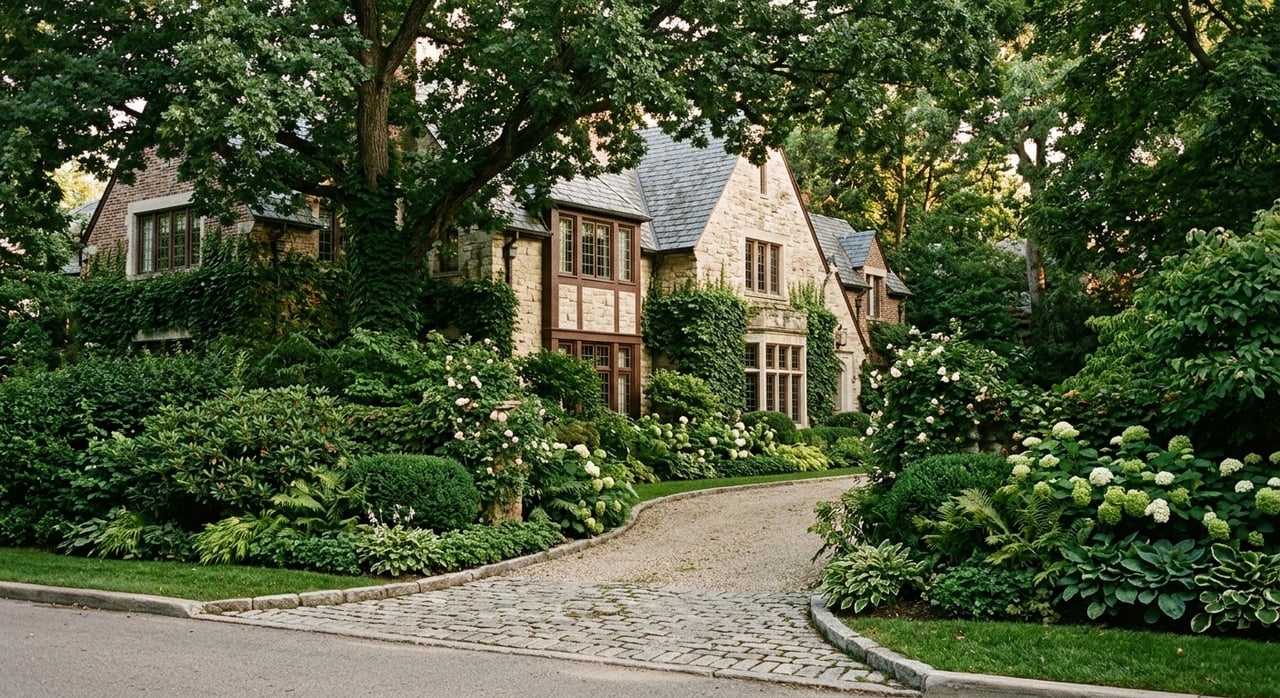
If you look at Menlo Park as one luxury market, you can miss what matters most. The city’s higher-end housing landscape works more like a collection of distinct micro-neighborhoods, each with its own feel, lot pattern, housing stock, and day-to-day rhythm. If you are trying to decide where you fit best, this guide will help you compare four key pockets through the factors that tend to shape real-life satisfaction: walkability, privacy, architecture age, and school-assignment fit. Let’s dive in.
Menlo Park’s planning materials show meaningful variation from one neighborhood to another. Lot sizes, block layouts, home eras, and pedestrian connectivity can change quickly across a short distance.
That matters in the luxury market because your experience of a home is not just about square footage or price. In Menlo Park, the bigger question is often which version of Menlo Park you want.
A practical way to compare neighborhoods is to focus on four filters:
The last point is especially important. Menlo Park residents may fall into different elementary school districts, so neighborhood name alone is not enough. The city and Menlo Park City School District both indicate that school placement should be verified by exact address.
Central Menlo is one of the city’s older neighborhoods. It is generally bounded by Valparaiso Avenue, Johnson Street, Fremont Street, Arbor Road, San Francisquito Creek, and Vine Street, Cloud Avenue, and North Lemon Avenue.
The city describes Central Menlo as a residential area with traditional development patterns, compact urban lots, and a dense mix of single-family and multi-family buildings. Homes include one- and two-story Ranch-style properties, along with some Classical Revival examples.
For many buyers, the defining feature here is connectivity. City materials note good pedestrian access, and this neighborhood sits close to parks, Caltrain, and other amenities.
That in-town feel becomes even clearer when you look at downtown Menlo Park. The city describes downtown as walkable and tree-lined, with shops, dining, and a Sunday farmers market, and notes that the Caltrain station is one block away.
If you want a luxury address with a stronger everyday connection to the downtown core, Central Menlo stands out. It is likely to appeal to buyers who value being able to move around on foot and who prefer an established neighborhood fabric over larger, more secluded parcel patterns.
The tradeoff is that compact lots and denser development typically create a different sense of space than you would find in more lot-driven parts of Menlo Park. If privacy and broad setbacks top your list, you may want to compare it directly with Sharon Heights.
Felton Gables is a small single-family neighborhood just north of downtown Menlo Park. It is bounded by Holbrook-Palmer Park, Encinal Elementary School, Encinal Avenue, and the railroad right-of-way.
The city’s housing materials say most homes were built in the 1930s, 1940s, and 1950s. Styles are largely Ranch and Cottage, while the community character report describes relatively consistent home size and date, with large one-story dwellings in period-revival styles.
This gives Felton Gables a more unified architectural identity than some other areas. If you are drawn to older single-family neighborhoods with a cohesive visual rhythm, this pocket deserves a close look.
Felton Gables also has a clearly defined lot framework. The city’s zoning table lists the district with a 10,000-square-foot minimum lot area and minimum lot dimensions of 80 by 100 feet.
At the same time, recent planning filings show that some rebuilds and additions still involve substandard lots. In practical terms, that suggests an older parcel pattern rather than a perfectly uniform modern subdivision.
For buyers, that means due diligence matters. Two homes in the same neighborhood may offer a similar look from the street while differing meaningfully in parcel history, expansion flexibility, or rebuild context.
Felton Gables may fit you well if you want a neighborhood that feels established, single-family-focused, and close to the downtown core without being as urban in feel as Central Menlo. It often reads as a classic Menlo Park choice for buyers who appreciate period character and a more consistent neighborhood identity.
Sharon Heights sits in the southwestern part of Menlo Park. It is generally bounded by Sand Hill Road, Santa Cruz Avenue, Altschul Avenue, Trinity Drive, and the Sharon Heights Golf & Country Club.
The city describes Sharon Heights as one of Menlo Park’s younger neighborhoods. Its physical pattern includes large curvilinear blocks, limited pedestrian connectivity, deep front yards, narrow side setbacks, mature landscaping, and a more auto-oriented circulation pattern.
Housing here is mainly one- to two-story single-family homes dating primarily to the 1960s. There are also pockets of planned development, condos, and other multi-family housing closer to Sand Hill Road.
The defining distinction is lot scale. Menlo Park’s existing-conditions report notes typical parcel sizes around one-third acre, making Sharon Heights the most lot-forward of the four neighborhoods covered here.
If your priority is privacy, setbacks, and a more residentially sheltered feel, Sharon Heights often rises to the top. Mature landscaping and deeper lots can create a sense of separation that is harder to find in more compact parts of Menlo Park.
It is less pedestrian-oriented than Central Menlo or Felton Gables, which is part of the tradeoff. But the neighborhood benefits from access points that matter to many Peninsula buyers, including proximity to I-280 and Sand Hill Road.
The area also includes Sharon Park, and the free M1 Crosstown Shuttle connects Sharon Heights with downtown Menlo Park, downtown Palo Alto, and the Stanford Shopping Center and Stanford Medical Center area.
Sharon Heights may be the best fit if you are looking for a larger-parcel environment with a calmer, more private setting. For buyers balancing luxury, convenience, and land, it often occupies a very different lane than the in-town Menlo Park neighborhoods.
Menlo Oaks is different from the others because it is an unincorporated community within Menlo Park’s sphere of influence. That status can shape everything from neighborhood feel to service patterns, which is one reason buyers often experience it as distinct from the incorporated west-side neighborhoods.
City and county transportation materials place Menlo Oaks around corridors such as Coleman Avenue and Ringwood Avenue, near Bay Road, the VA campus, and east-side school corridors. Planning materials for nearby streets describe a predominantly residential setting with mostly one-story ranch or traditional single-family homes, plus some two-story properties.
Compared with Sharon Heights, Menlo Oaks appears more lot-constrained and more rebuild-oriented. A city Planning Commission agenda describes a project on a substandard lot in the R-1-U district, and city housing-element sample sites include parcels around 0.16 acre, or roughly 6,979 square feet.
Those sample parcels are not a neighborhood-wide average, but they do point to a smaller-lot urban infill pattern. That makes Menlo Oaks one of the more variable micro-markets in this group.
In Menlo Oaks, broad assumptions can lead you astray. Lot size, incorporation status, and address-specific service patterns may all deserve a closer look before you compare one property to another.
For some buyers, that variability is part of the appeal. For others, it means you need sharper property-level analysis, especially if future renovation or redevelopment potential is part of your plan.
School assignment is one of the most important filters in Menlo Park, and it should be verified by exact address. Menlo Park City School District states that neighborhood-school placement is based on its School Locator, not simply on a neighborhood name.
The city’s education materials show that Menlo Park residents may be served by Las Lomitas Elementary School District, Menlo Park City School District, or Ravenswood City School District at the elementary level. The city also notes that Menlo-Atherton High School serves Menlo Park students in Sequoia Union High School District.
For luxury buyers, this is where neighborhood shorthand stops being useful. A home can align with your preferred lot size and location, but if school-district fit matters to your household, address-level verification should happen early.
Here is the clearest buyer lens based on city and district materials:
That summary does not tell you which neighborhood is best. It tells you which tradeoff you are making.
In most Menlo Park luxury searches, the real decision comes down to this:
If you are early in the process, start by ranking your priorities before touring too many homes. Buyers often say they want everything, but Menlo Park’s micro-neighborhoods reward clarity.
A simple ranking can help:
Once you know your order of priorities, the map gets much easier to read. Instead of comparing every listing to every other listing, you can focus on the micro-neighborhoods that actually match the way you want to live.
In a market like Menlo Park, that kind of precision matters. The right result usually comes from understanding the block-by-block differences that do not show up in a broad citywide search.
If you are weighing where you fit within Menlo Park’s luxury market, working with a hyperlocal advisor can make the search more efficient and much more informed. For a discreet, experienced perspective on Menlo Park and the surrounding Peninsula luxury market, connect with Scott Dancer.

Primary phone
(650) 888-8199License Number
#00868362Address
2930 Woodside RdScott Dancer specializes in Woodside, Portola Valley, Atherton, and Menlo Park – since 1984. He sold more Woodside/Portola Valley homes than any other agent for the period of 2005 to 2021 and remains the top agent for the luxury segment of the Woodside and Portola Valley markets.
In 2012, his Woodside sale was the record-high value residential sale for the entire United States. From 2012 to 2021, Scott sold more Woodside/Portola Valley homes than any other agent or entire company and sold the highest priced home in both Woodside and Portola Valley in 2017. Scott provides his full attention and personal service to his clients, whether buyers or sellers.
Clients and agents alike get Scott’s personal full attention, not an assistant’s. Scott is a member of the National Association of Realtors, California Association of Realtors, Silicon Valley Association of Realtors, and has been a Woodside residential sales agent since 1984. Scott resides in Woodside with his wife of over 30 years and has two children.
Stay up to date on the latest real estate trends.
October 8, 2026
October 1, 2026
September 24, 2026
September 17, 2026
September 10, 2026
September 7, 2026
Getting Your Home Pricing Strategy Right From Day One in Woodside.
Scott Dancer | September 7, 2026
What to Know About a Home Inspection Before Buying in Woodside, California.
Scott Dancer | September 7, 2026
A Guide to the Architectural Styles in Woodside, California.
Scott Dancer | September 7, 2026
Questions to Ask Before Buying a Home in Woodside, California.