In Portola Valley, the Acre on the Listing Isn't the Acre You Can Build On
September 17, 2026
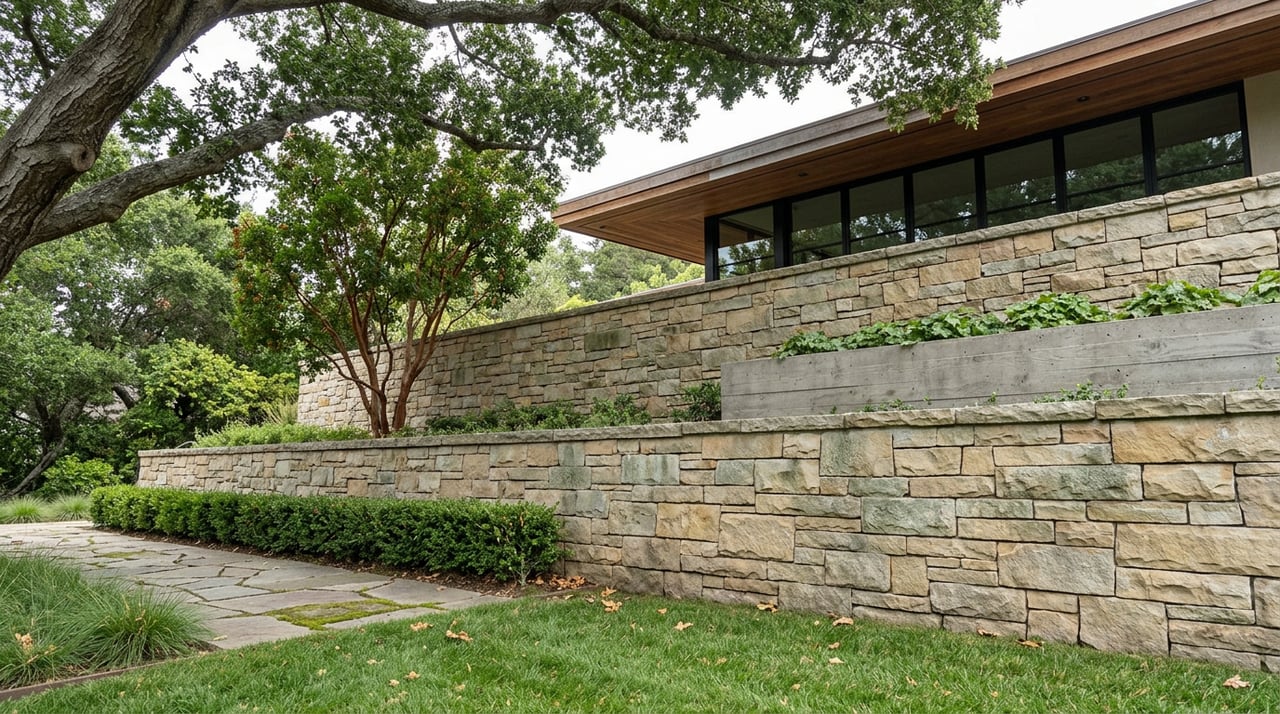
September 17, 2026
Two buyers tour Portola Valley on the same Saturday. Both listings say two acres. Both sit in the same zoning district. By Monday, one buyer's architect tells her she can build a five-bedroom house with a pool house and a detached office. The other buyer's architect tells him his buildable envelope barely fits the home that's already there.
Nothing about the deed changed between Friday and Monday. What changed is the slope.
Portola Valley does not zone by acreage alone. It zones by acreage adjusted for grade, and the adjustment is steep enough to change what a parcel is actually worth to build on. For a buyer comparing this market to Woodside, Atherton, or the flatter blocks of Menlo Park, that difference in constraint is the local knowledge worth having before an offer, not after.
Most of Portola Valley's residential land carries a slope density combining designation, a suffix like SD-1, SD-2, or SD-3 tacked onto the base zone. The name suggests a technicality. The math says otherwise.
The clearest public illustration of how far this swings comes from a land use dispute over a Stanford-owned parcel in the RE 3.5/SD-2 district along Alpine Road. Resident advocates working through the math for that project found that in this district, the minimum net parcel size required per dwelling unit ranges from roughly 2.03 acres, about 88,427 square feet, at an average slope of 1 degree, up to 8.7 acres, about 378,972 square feet, once average slope reaches 50 degrees or more. Same zoning district. More than four times the land required, depending on how steep the ground actually is.
That is the number a listing sheet never carries. An acreage figure on a hot sheet or a portal page describes the parcel as drawn on a map. It says nothing about whether the buildable portion of that parcel sits on a gentle bench or a hillside that eats density the way a floodplain eats setback.
The larger building is appropriate because steep slopes, areas of unstable geology or areas subject to flooding so limit development of the property that in order to develop a reasonable plan for the property it is necessary to concentrate more than eighty-five percent of the floor area in a single building.
That's language straight from the town's own zoning ordinance, written for the narrow case where a parcel's slope is so constrained that the code allows a builder to concentrate floor area rather than spread it. It exists because slope-driven scarcity is common enough in Portola Valley that the town had to write an exception for it.
| Average slope | Approximate net area required per dwelling unit |
|---|---|
| 1 degree | 2.03 acres (about 88,427 sq ft) |
| 50 degrees or more | 8.7 acres (about 378,972 sq ft) |
The table only covers the two ends of one district's range, RE 3.5/SD-2, but the principle carries across the town's other slope density districts too, including the mountainous residential category that makes up the largest single land use type in Portola Valley by acreage. A buyer or a listing agent quoting a lot size without a slope study is quoting half the number.
Slope does not stop at determining how much land a house needs. It also caps how large the house itself can be. Portola Valley calculates an Adjusted Maximum Floor Area for every residential parcel, and that figure is based on the property's acreage, its average slope, and whether it sits in a geologic or flood zone, in addition to its base zoning district. Town staff can run this calculation for a specific parcel, and the main residence plus required covered parking cannot exceed 85 percent of that adjusted number.
In other words, two neighbors with identical lot sizes and identical zoning can have different ceilings on how much house they're allowed to build, because the town measured their hillsides differently. A buyer weighing a renovation or a full rebuild needs that number before falling for a floor plan, not after signing a contract that assumes one.
Even a project that clears the slope and floor area math still has to clear design review. Portola Valley's Architectural and Site Control Commission, five volunteer residents appointed by the Town Council, reviews any building or addition of 400 square feet or larger, anything two stories or taller, all commercial construction, and any grading beyond set thresholds. The commission meets the second and fourth Monday of each month at 7:30 p.m. in the town's Historic Schoolhouse.
The town's own description of the commission's purpose is direct about what it's protecting: preserving the visual character of Portola Valley, the stability of land values, and preventing indiscriminate grading and tree removal. A first hearing can be scheduled as soon as two weeks after a complete submittal, though the agenda fills up during busy stretches and a straightforward addition can still take longer if neighbors or commissioners ask for revisions.
Before a hearing, an applicant may need to stake the proposed structure's footprint on the actual lot, and the commission can require story poles, tall markers that show a building's real height and bulk against the sky, so neighbors can see what they'd be looking at from their own property. This is not paperwork theater. Commission minutes from past hearings show neighbors driving by a site specifically to view story poles from their own driveways before offering comment on a project's height and mass.
For a buyer used to markets where design review means a rubber stamp, Portola Valley's process is a genuine timeline variable. It belongs in the purchase math the same way a slope study does.
Three of Portola Valley's roads carry setback requirements that exist independent of the base zoning district: 75 feet along Alpine Road, 50 feet along Portola Road, and 200 feet along Skyline Boulevard. These special setbacks came up again in early 2026, when the town's Architectural and Site Control Commission reviewed a draft rezoning and commissioners specifically asked that the code preserve all three road-specific setbacks rather than listing just one example, a sign of how seriously the town treats them as distinct from a district's general yard requirements.
A parcel that reads as three acres on a listing sheet, and fronts one of these roads, may have a meaningfully smaller usable building area than the acreage number implies once that setback is drawn in from the property line.
Portola Valley Ranch, one of the town's planned unit developments, offers a tidy example of how far this idea can go even inside a single subdivision. Every lot in the Ranch has a mapped Building Envelope, the only area where a home may be sited, defined within what the association calls the E-1 area. The remainder of most lots, the E-2 area, allows no structures at all beyond paths and limited landscape lighting. Homeowners there don't own a buildable acre. They own an acre with a building envelope drawn onto it, and the deed and the buildable footprint have never been the same shape.
It is a private-community version of exactly what the town's slope density formula does more broadly. The acreage on the paper and the acreage you can actually use are two different numbers, and the gap between them is where value gets made or lost.
Does a bigger lot always mean more house? Not in Portola Valley. A larger parcel on steep ground can carry the same or a smaller Adjusted Maximum Floor Area than a smaller, flatter one, because the floor area calculation weighs slope alongside acreage.
Can I skip Architectural and Site Control Commission review on a smaller project? Some smaller, state-mandated projects such as ADUs that meet objective state standards are processed without a discretionary hearing. Most additions of 400 square feet or larger, and anything two stories or taller, still require commission review.
Is the slope density formula the same in every zoning district? No. The ratio of land required per dwelling unit varies by district and by the specific slope density combining designation attached to it. A parcel's own topographic survey, matched against its district's table, is the only reliable way to know its actual buildable yield.
Portola Valley rewards buyers and owners who do this math early. The acreage figure gets you into the conversation. The slope study, the floor area calculation, and a realistic read on commission timelines are what get you to a house you can actually build.
If you're comparing acreage across Woodside, Portola Valley, Atherton, or Menlo Park and want to understand what a specific parcel's numbers actually mean before you write an offer, Scott Dancer has spent four decades working these hillsides and can help you read the lot the way the town does. Let's Connect.

Primary phone
(650) 888-8199License Number
#00868362Address
2930 Woodside Rd,Scott Dancer specializes in Woodside, Portola Valley, Atherton, and Menlo Park – since 1984. He sold more Woodside/Portola Valley homes than any other agent for the period of 2005 to 2021 and remains the top agent for the luxury segment of the Woodside and Portola Valley markets.
In 2012, his Woodside sale was the record-high value residential sale for the entire United States. From 2012 to 2021, Scott sold more Woodside/Portola Valley homes than any other agent or entire company and sold the highest priced home in both Woodside and Portola Valley in 2017. Scott provides his full attention and personal service to his clients, whether buyers or sellers.
Clients and agents alike get Scott’s personal full attention, not an assistant’s. Scott is a member of the National Association of Realtors, California Association of Realtors, Silicon Valley Association of Realtors, and has been a Woodside residential sales agent since 1984. Scott resides in Woodside with his wife of over 30 years and has two children.
Stay up to date on the latest real estate trends.
September 17, 2026
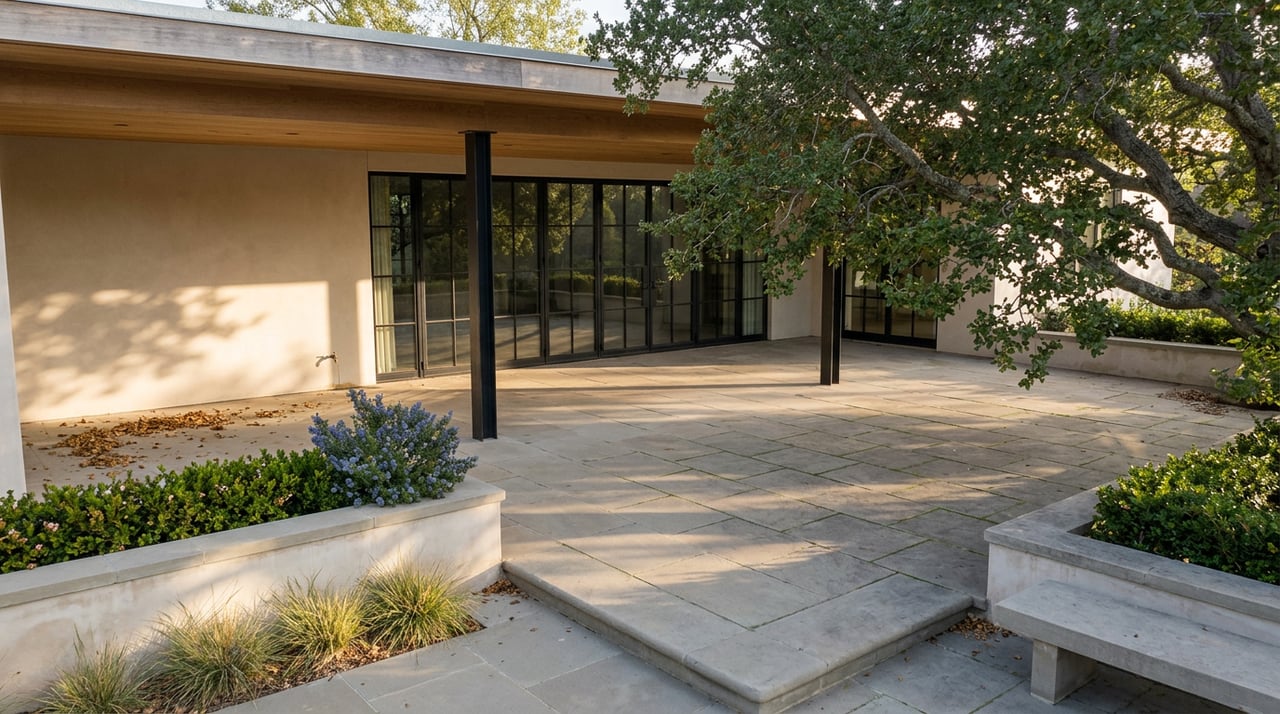
September 10, 2026
September 7, 2026
Getting Your Home Pricing Strategy Right From Day One in Woodside.
Scott Dancer | September 7, 2026
What to Know About a Home Inspection Before Buying in Woodside, California.
Scott Dancer | September 7, 2026
A Guide to the Architectural Styles in Woodside, California.
Scott Dancer | September 7, 2026
Questions to Ask Before Buying a Home in Woodside, California.
September 3, 2026
August 27, 2026
Scott Dancer | August 24, 2026
The Redwoods, Trails, and Town Character That Show What Makes Woodside So Special.