Woodside's Median Price Is Quietly Two Different Markets
August 20, 2026
August 20, 2026
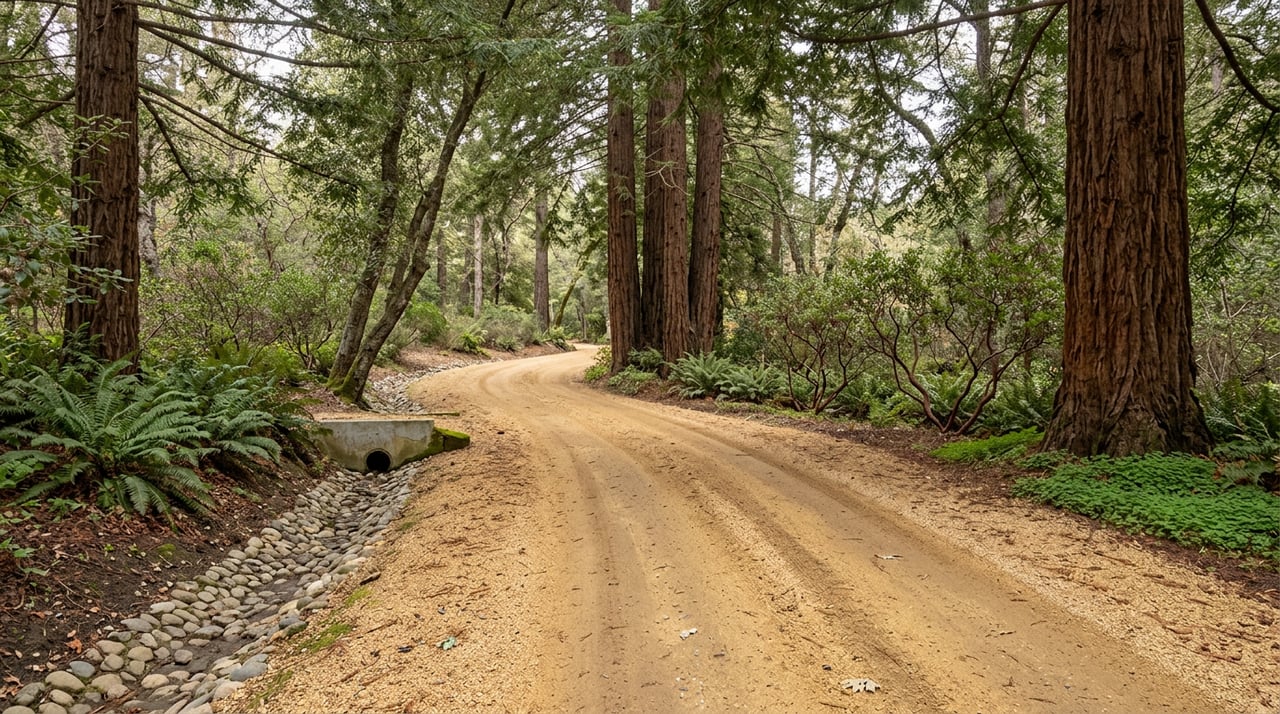
Picture two Woodside listings hitting the market on the same Friday, both asking a shade over $5 million, both roughly the same square footage. One sits east of Interstate 280, tied into a municipal sewer line and a water utility. The other sits up toward Skyline, reached by a shared gravel lane, drawing water from a well and running its own septic system. Within two weeks, the first home is in contract, likely at or above asking. The second is still sitting there a month later, and when it finally sells, the number has moved. Same price bracket. Same town. Two entirely different transactions.
That gap is the story Woodside's median price never tells.
Woodside's headline numbers this year read like a market on fire. Over the three months ending in May 2026, the town's median sale price reached $5.2 million, up 11.4 percent from the same period a year earlier, with homes selling in an average of 14 days compared to 38 days the year before. A separate read of March 2026 sales put the median closer to $5.75 million, with a median time to accepted offer of just 13 days and an over-ask rate above 47 percent on fresh listings in the $4 million to $7 million tier.
Those two windows do not perfectly agree on the number, but they agree on the shape. The town is not moving faster across the board. It is moving fast for one kind of listing and slow for another, and both are getting averaged into a single price that tells a buyer almost nothing about which one they are looking at.
Part of the reason the split is so wide comes down to what a Woodside price tag is measuring in the first place. Across the town's residential parcels, the median lot runs about 56,000 square feet against a median home footprint of under 3,000 square feet, a land-to-structure ratio of roughly nineteen to one. More than a third of residential parcels in town are recorded as vacant land rather than a house at all.
In practice, that means most Woodside buyers are pricing acreage first and a structure second. And everything that makes raw acreage livable, the water supply, the waste disposal, the road that reaches it, is exactly the part of the purchase that a listing photo and a square footage figure cannot show you.
Woodside's water and sewer coverage is a patchwork, not a blanket. The Town's own directory tells residents that a public sewer failure gets reported to the Fair Oaks Sewer Maintenance District if the home sits east of I-280 or within the Glens neighborhood, and to Town Hall for sewer service anywhere else in town. The Fair Oaks district itself is a San Mateo County operation covering parts of Atherton and Woodside along with Redwood City and unincorporated North Fair Oaks, running roughly 82 miles of pipeline that ultimately discharges through Redwood City into the Silicon Valley Clean Water treatment system.
Homes inside the Town's own Cañada or Town Center service areas are on Woodside-maintained sewer lines, cleaned annually under a maintenance contract with West Bay Sanitary District, with known trouble spots cleaned quarterly. Outside those service boundaries, and especially toward the hills, the more common setup is a private septic system paired with either a connection to California Water Service or Bear Gulch, or a private well entirely.
None of that shows up on a comparables sheet, but it shows up on a closing statement. A septic system replacement in Woodside typically runs $30,000 to $80,000 or more depending on soil conditions, and a full well system, drilling, pump, pressure tank, and treatment, can run $15,000 to $50,000. A buyer touring the two homes from the opening scene is not choosing between finishes. They are choosing between a utility relationship with a public agency and a piece of equipment they will own, maintain, and eventually replace themselves.
The utilities are only half of it. Woodside's own contact directory routes private road questions away from the Town entirely, to whatever Homeowners Association or road group holds the recorded agreement.
For a buyer, that turns a driveway into a diligence item. Is there a recorded road maintenance agreement. Is there a reserve fund, and how large is it. Has there been a special assessment in the last few years, and is one likely in the next few. The recorded agreement itself is the document that answers the question, not the checkbox on a form.
This is where the two-speed market and the utility question meet. Correctly priced Woodside listings in the $4 million to $7 million range have been moving to accepted offer in about two weeks this year, with buyers competing hard enough to push nearly half of them over asking. Listings that stall and come back to market tell a different story entirely, taking a median of 43 days to go pending on the relist and giving back a median of 14.9 percent off their original asking price in the process.
Price alone does not fully explain that gap. A serious buyer's agent underwriting a Woodside estate in a two-week window needs the septic report, the water test, and the road agreement in hand before they can bid with confidence. When a listing arrives with those documents already assembled, it moves inside that fast window. When it arrives without them, the buyer pool either discounts its offer to cover the unknown or waits for the seller to do the homework, and that wait shows up later as the deeper price cut on the relist.
Layered on top of all this is a separate structural drag on supply. About 22 percent of Woodside's residential parcels have been held for more than 20 years, which under Proposition 13 means many owners are sitting on a tax basis far below current market value. Selling resets that basis to today's price, a real cost that keeps some long-held estates off the market regardless of how strong buyer demand looks. That scarcity is part of why the well-prepared listings that do reach market draw such intense competition once they arrive.
For a buyer comparing two Woodside properties at a similar price, the questions worth asking before a walkthrough go well beyond the kitchen and the view:
None of these questions should discourage a buyer from a Woodside estate on well, septic, and private road. Many of the town's finest properties run on exactly that setup, and it is part of what preserves the privacy and acreage the town is known for. The point is that the price alone will not tell you which kind of ownership you are stepping into.
Does every Woodside home run on well and septic? No. Coverage is genuinely mixed. Homes east of I-280 and in the Glens are more likely to be on public sewer through the Fair Oaks Sewer Maintenance District, and some properties closer to the Town Center connect through Cal Water or Bear Gulch. Toward the hills and on larger parcels, private wells and septic systems are far more common.
How do I find out if a road is private before I even schedule a showing? The recorded plat and any road maintenance agreement will settle it, and your agent can pull those records before you tour the property. As a quick signal, the Town's own contact page sends private road questions straight to the relevant Homeowners Association rather than to Town Hall, which is itself a useful clue about which kind of road you are looking at.
Should I avoid a home on septic and well altogether? Not necessarily. What matters is whether the price reflects the system's age and condition, and whether you have built inspection findings and any near-term reserve costs into your offer rather than discovering them after close.
Woodside rewards buyers who understand these distinctions before they compete for a property, not after. If you are comparing homes across Woodside, Portola Valley, Atherton, or Menlo Park and want to know exactly what sits underneath a given listing's price, Scott Dancer has spent four decades working this market from the inside. Let's Connect.
This article is general information, not legal, tax or financial advice. Consult a qualified professional about your situation.

Primary phone
(650) 888-8199License Number
#00868362Address
2930 Woodside RdScott Dancer specializes in Woodside, Portola Valley, Atherton, and Menlo Park – since 1984. He sold more Woodside/Portola Valley homes than any other agent for the period of 2005 to 2021 and remains the top agent for the luxury segment of the Woodside and Portola Valley markets.
In 2012, his Woodside sale was the record-high value residential sale for the entire United States. From 2012 to 2021, Scott sold more Woodside/Portola Valley homes than any other agent or entire company and sold the highest priced home in both Woodside and Portola Valley in 2017. Scott provides his full attention and personal service to his clients, whether buyers or sellers.
Clients and agents alike get Scott’s personal full attention, not an assistant’s. Scott is a member of the National Association of Realtors, California Association of Realtors, Silicon Valley Association of Realtors, and has been a Woodside residential sales agent since 1984. Scott resides in Woodside with his wife of over 30 years and has two children.
Stay up to date on the latest real estate trends.
October 22, 2026
October 15, 2026
October 8, 2026
October 1, 2026
September 24, 2026
September 17, 2026
September 10, 2026
September 7, 2026
Getting Your Home Pricing Strategy Right From Day One in Woodside.
Scott Dancer | September 7, 2026
What to Know About a Home Inspection Before Buying in Woodside, California.